
Sarah is the director of policy, communication and partnerships at RAP where she oversees the work of the global communication team and manages external partnerships. She has over 20 years of experience in the nonprofit environmental sector and is passionate about bringing practical solutions to environmental problems, including the urgent need to accelerate the energy transition.
Before joining RAP Sarah worked for seven years at the Global Strategic Communications Council (GSCC), initially setting up a desk in Spain, then becoming a senior Europe manager and acting director, overseeing the work of national desks in Europe. She also coordinated the GSCC's work on gas in Europe and contributed to multiple joint projects across the international network. Before joining GSCC, Sarah worked as a consultant for the European Climate Foundation in the UK and Spain, and the ECIU in the UK. She spent many years at the RSPB managing policy campaigns across a broad range of European environmental policies together with Birdlife Europe and cut her teeth in Friends of the Earth as the waste campaigner.
In September 2017 Sarah moved from the UK to Spain with her Spanish husband and three children. When not working she enjoys novels, yoga and hiking in nature, and sharing good food with family and friends. Sarah speaks English and Spanish and has a good understanding of Catalan. She has a degree in politics, philosophy and economics from the University of Oxford and a master’s in conservation biology from Manchester Metropolitan University.
Latest Insights from RAP Experts
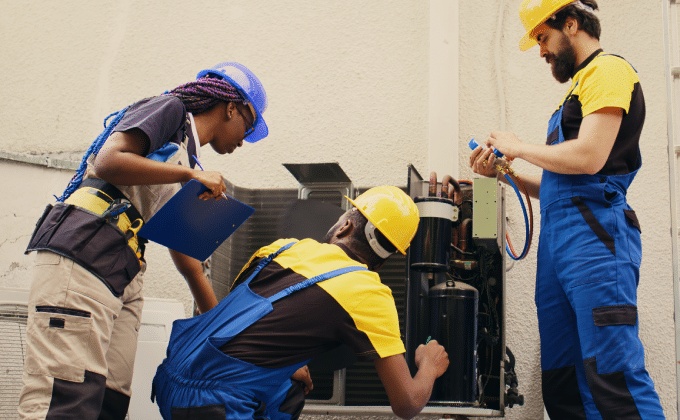
Money for something: Designing effective heat pump support schemes in Europe
Heat pumps sit at the core of Europe’s plan to cut fossil gas imports and shield… Read More +
Power outage rapid response toolkit: Update 2026
Interruptions in electricity supply, ‘the lights going out,’ make for arresting headlines and capture public attention. Read More +

How did you catch the “energy” bug?
I’ve always been motivated by finding solutions rather than dwelling on problems. When I thought about the potential devastation of climate change, it became clear to me that electrification with renewable energy is the key to cutting emissions and avoiding the worst impacts. I also hate waste, and the inefficiency of the fossil fuel system shocked me—especially when I learned about the “primary energy fallacy,” and how half to two-thirds of fossil energy is lost as waste heat. That insight made me even more determined to accelerate electrification. What excites me about RAP is that we generate good practical ideas that help speed up electrification, helping make energy cleaner, more affordable, and more efficient.
What is something that makes you feel hopeful about the future?
The cost reductions of renewable energy technologies, the fact that solar and batteries can cover the majority of demand in many countries, and the speed of the transition in countries like China, show that the energy transition is inevitable. And despite some bad faith actors and vested fossil interests trying to slow it, there are many brilliant people working hard to deliver a cleaner, better future.
If I were a superhero, my superpower would be flying. I get asked this question regularly by my youngest son. He thinks having a magic wand like Harry Potter would be much more fun!