(This paper is part of the series Data Centers and the Next Era of Energy Regulation. Find an overview and all the related resources on the series page here.)
People everywhere are concerned about the impact data center load growth has on electricity prices, but data centers can drive rates up or down depending on variables that vary from place to place and over time. This report demystifies the structural factors that impact how customers experience data center load growth. Electricity regulatory frameworks differ significantly by region and state across the country, but there are three key cases that capture the most important distinctions. Policymakers and stakeholders need to understand how Georgia and Wisconsin are different from Texas and Pennsylvania to design and implement effective solutions that protect existing ratepayers.
Across all jurisdictions, concern arises when the costs caused by data center load growth are higher than what data centers pay. The following figure shows the key categories of financial contributions from data centers alongside categories of costs.
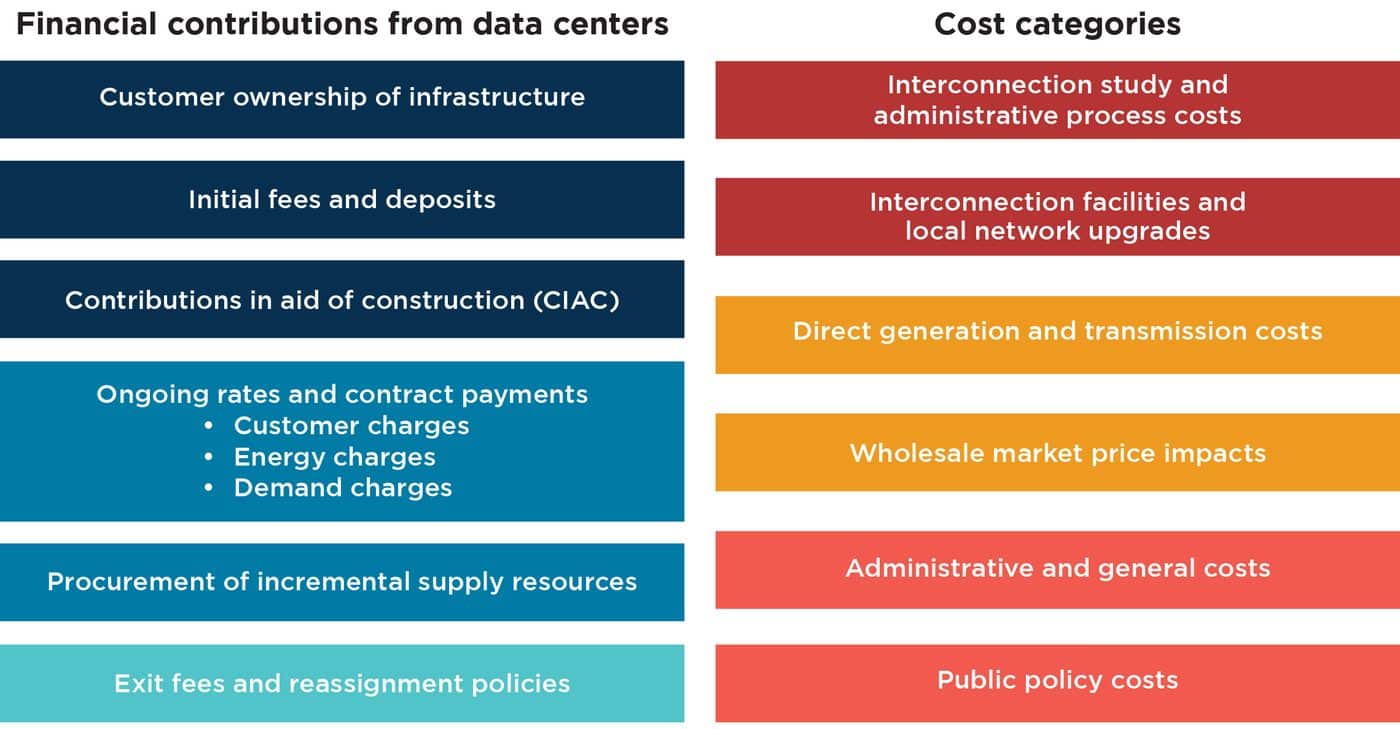
Analysts should consider the full life cycle of revenue from data centers, including the timing of payments, because up-front contributions can be banked, and later ones have more risk. For traditionally regulated utility costs, regulators have the authority to determine the allocation of costs across the customer base. In states with vertically integrated utilities, this includes generation supply costs, but regulators in fully restructured jurisdictions no longer have access to some of the traditional cost allocation tools for retail generation supply rates.
Another key distinction is the level of exposure a customer has to wholesale electricity market price increases. Fully restructured jurisdictions, like Texas and Pennsylvania, have a regulatory model where ordinary ratepayers tend to be exposed to wholesale price increases relatively quickly. In contrast, vertically integrated utility customers, like those in Georgia and Wisconsin, tend to be insulated in the short term from wholesale price increases, even if the utility participates in a wholesale market. Efforts to shield ratepayers from wholesale increases, often called “hedging”, have their own costs that must be weighed against their benefits.
Policymakers in states, RTO/ISOs and the Federal Energy Regulatory Commission have started to address some of these issues. The report provides examples across seven categories of reforms, but further work remains to be done. More broadly, further research is needed to tackle the challenges of this new era of load growth. Finding answers to these big picture questions can protect ratepayers while also laying the foundation for a 21st century regulatory system.