
Susan Das is junior associate for RAP’s team in India; his expertise lies in energy systems modelling and sub-national electricity reforms. Susan is focused on researching regulatory and policy approaches to handle future large-load growth due to emergence of data centres across states in India. Susan has a deep understanding of load forecasting for residential and agriculture sectors. This enables him to provide accurate and actionable advice on the forecasting and integration of large loads.
Before joining RAP in 2026, Susan worked as senior project scientist on energy demand modelling for Net Zero India project for Indian Institute of Technology, Delhi in collaboration with Prayas Energy Group and Princeton University. As part of his role, he led the energy demand modelling efforts for residential consumers, as well as developed frameworks to model irrigation demand forecast. Further, he was instrumental in developing scenarios for decarbonisation of the residential sector, based on levers such as electrification technologies, rate of urbanisation, evolution of efficiency trajectory, and macro-economic development parameters. He also developed an agent-based model of various farmer types in the drought-prone region of Karnataka to simulate the evolution of income and wealth inequality and measure climate resilience of farmers based on wealth, debt, crop choices and access to credit.
Prior to this, Susan worked on electricity reforms in Tamil Nadu tracking CapEx projects in the electricity sector, performing cost-benefit analysis for implementation of solar pumps based on case studies, and researching on the political economy of tariffs for households in Tamil Nadu.
Based out of Delhi, Susan can often be found playing chess, or delving into fascinating periods of history. He has been a former sprinter, and is also learning Turkish language and culture.
Susan holds a master’s in public policy focused on science, technology and innovation from Indian Institute of Technology, Delhi. He also has a degree in civil engineering.
Latest Insights from RAP Experts

Utility Service Obligations in the Large Load Era
(This paper is part of the series Data Centers and the Next Era of Energy Regulation. Find… Read More +
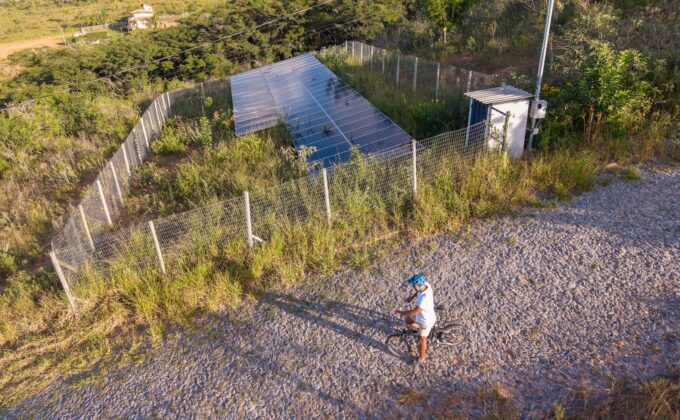
Modernização dos sistemas elétricos isolados do Brasil
Os Sistemas Isolados do Brasil atendem cidades e comunidades, quase todas na Amazônia, que não estão… Read More +
